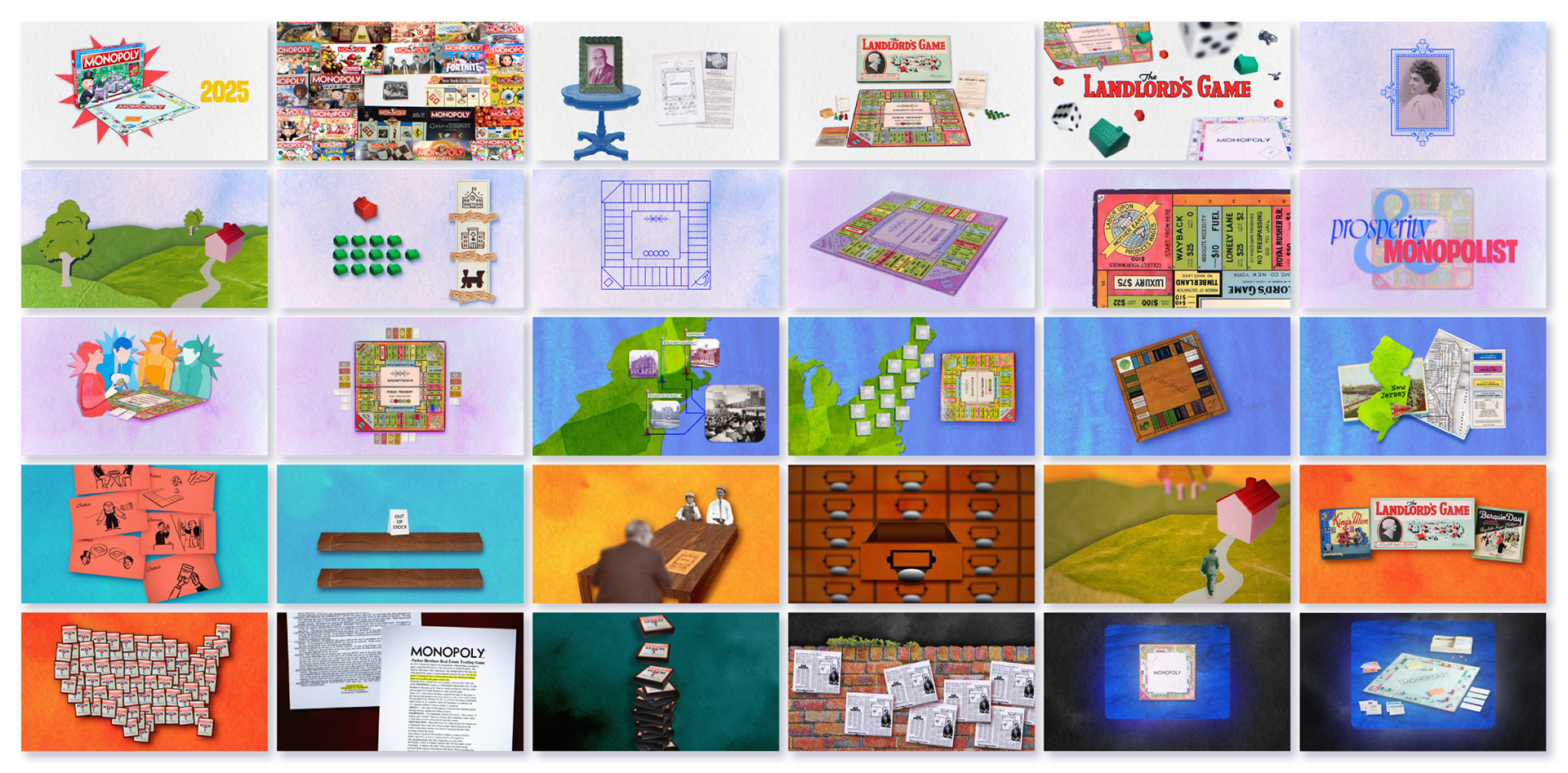
The Landlord's Game is a motion narrative highlighting the progressive origins of Monopoly and its cultural impact Problem Statement - Although intended as a capitalist critique, the evolution of the board game Monopoly erased its progressive origins and desensitized players to the dangers of capitalism through game mechanics. As a result, young adults lack engaging media that encourages critical reflection on economic systems through pop-culture relevance. Design Solution - The Landlord's Game is an animated narrative that highlights the progressive origins of the iconic game Monopoly, offering young adults to reflect and contrast economic ideologies though the games cultural impact and story behind its inception.
Full Video
Capstone Development
Initial Visual Inspiration
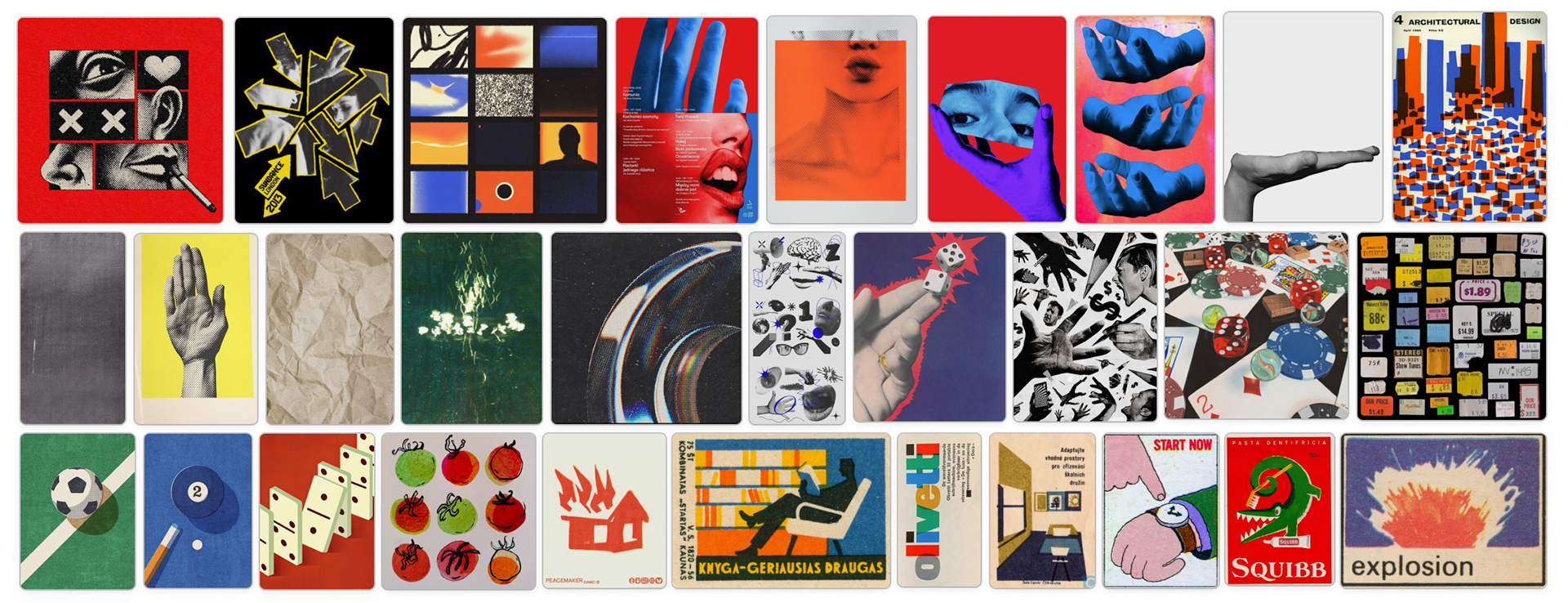
While developing an inspiration board through Pinterest, I looked for visual elements that felt cohesive to a narrative highlighting the history of an iconic board game without drawing too much inspiration from any visual look the game provided itself. What stuck out most to me was elements of collage, vintage print illustration work, film/paper texturing, overlays / offset strokes, and geometric prints.
Research & User Testing
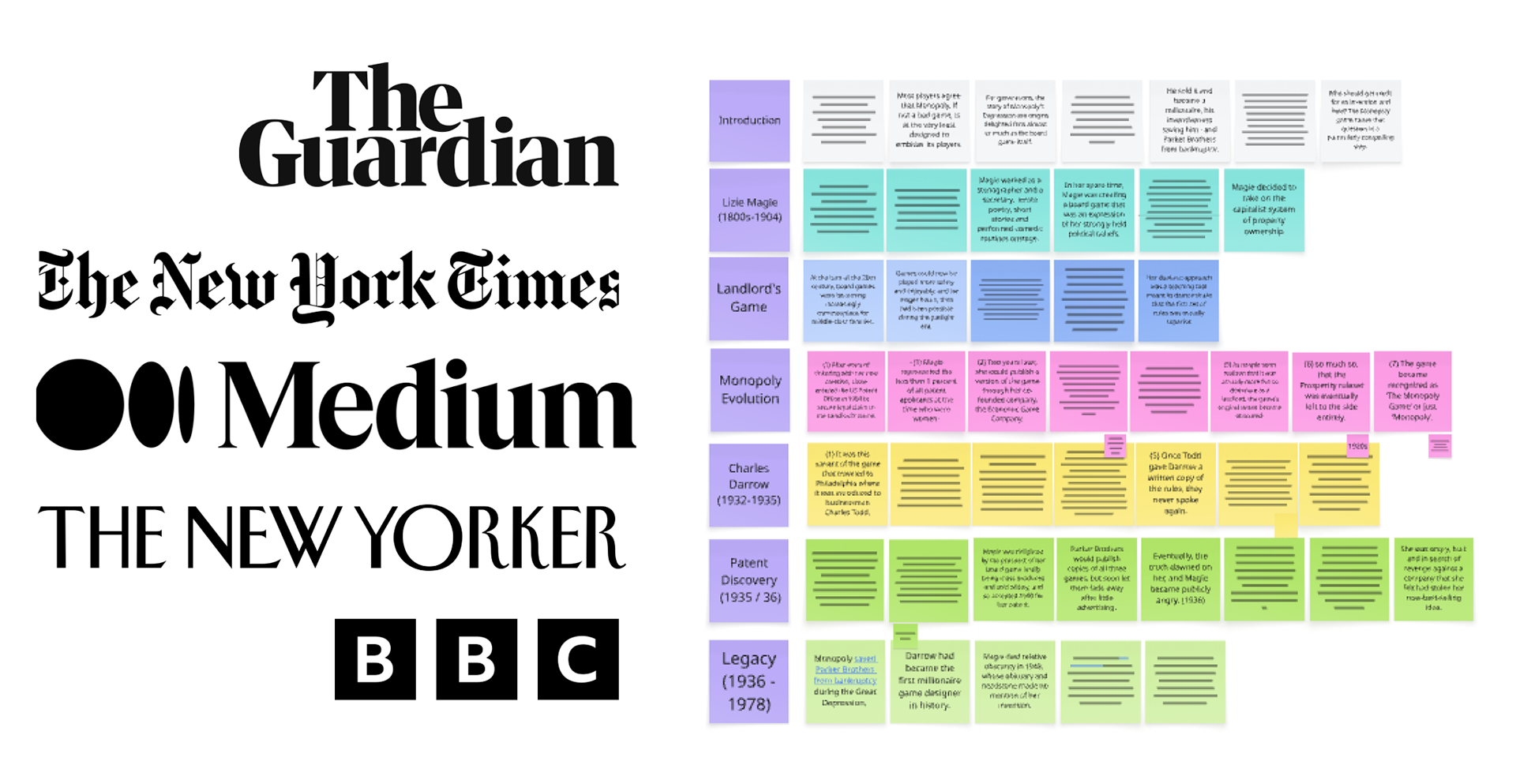
To build a foundation of research for the project, I collected summary and quotations across reputable web sources. Through Miro, I sorted my findings and sequenced 'chapters' of my narrative, then drafted out voiceover script content to condense information. For the video structure, I’ve defined the video process into eight segments between 35 - 50 seconds each to guide the viewer through the engaging narrative and streamline video production.
Sketch Storyboarding
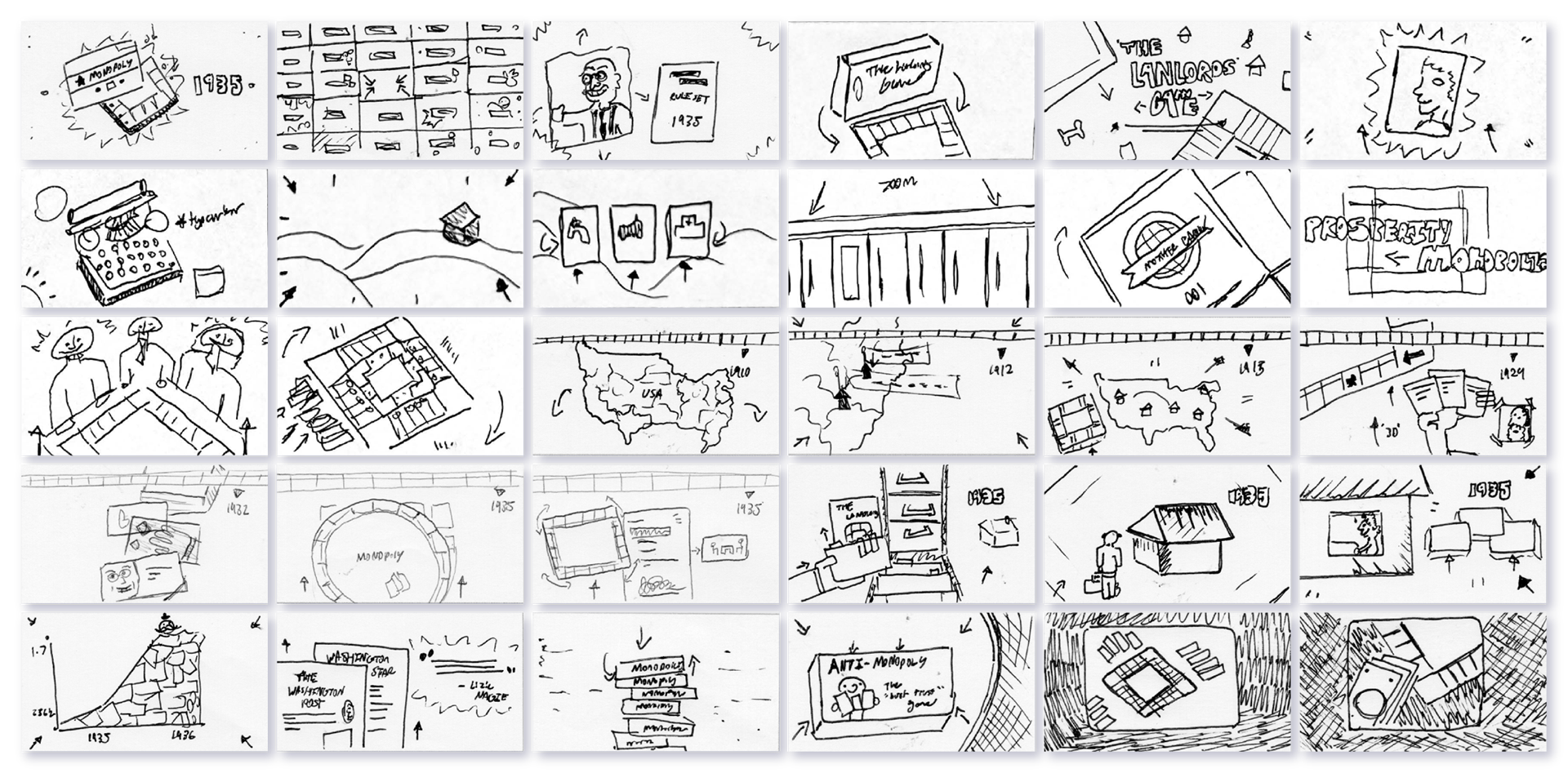
Figma Storyboard Deck
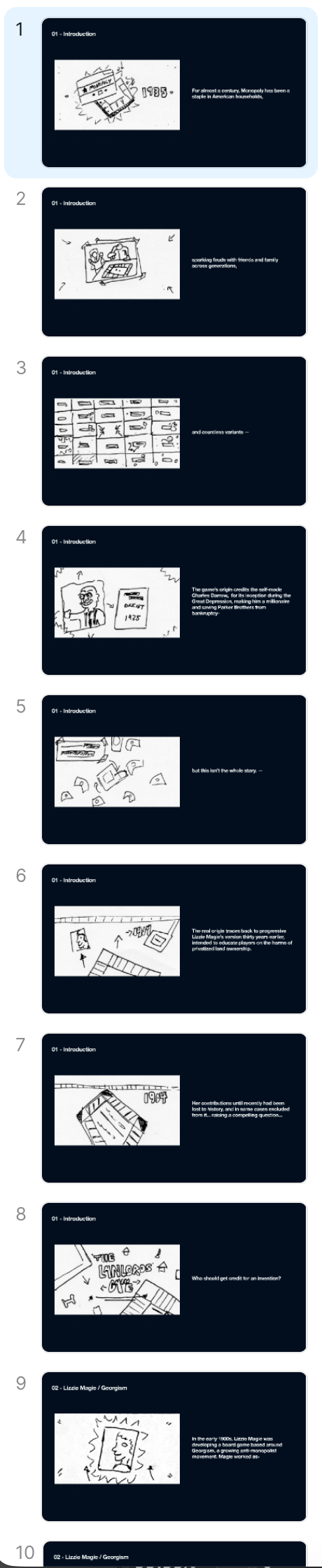
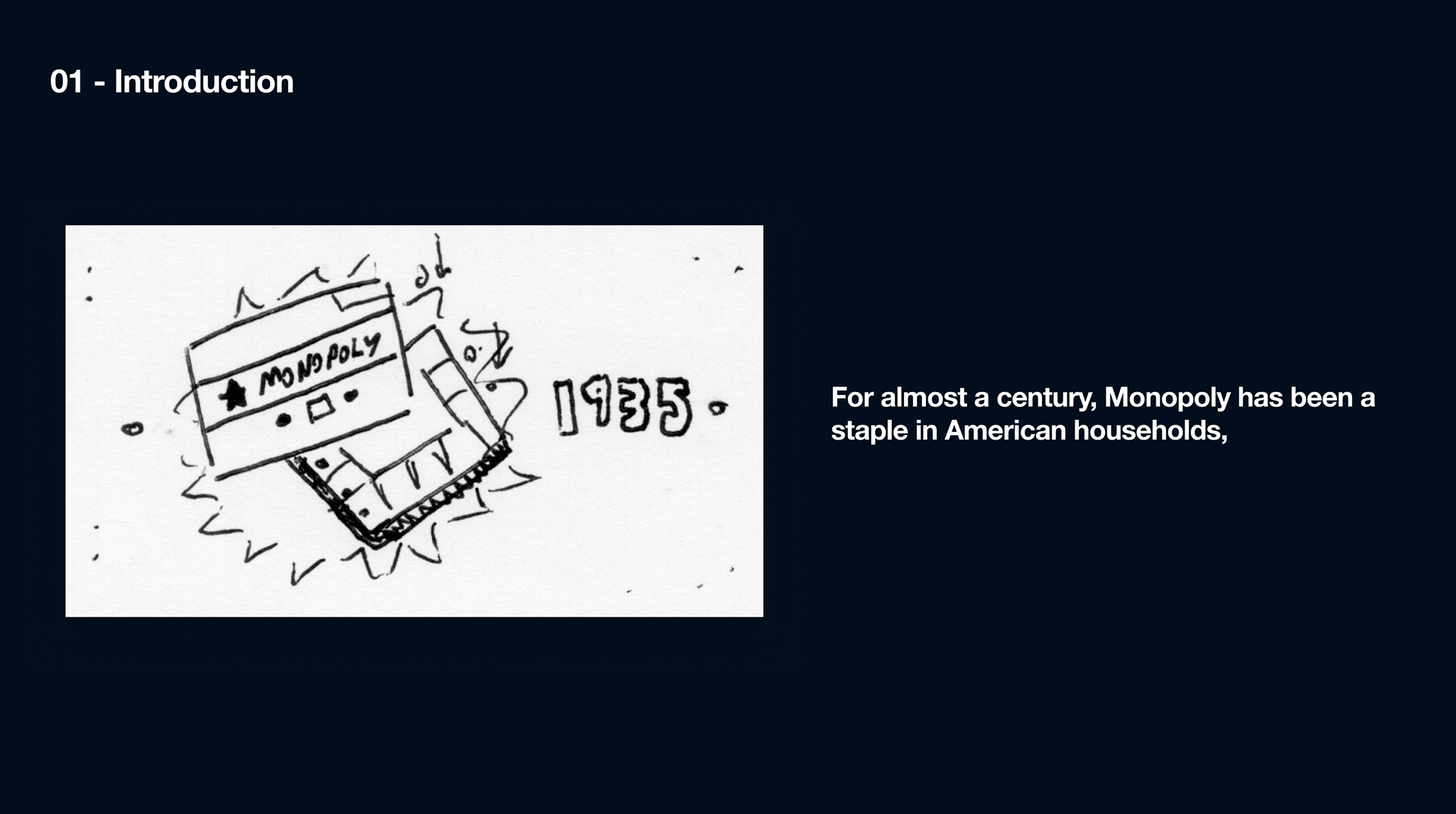
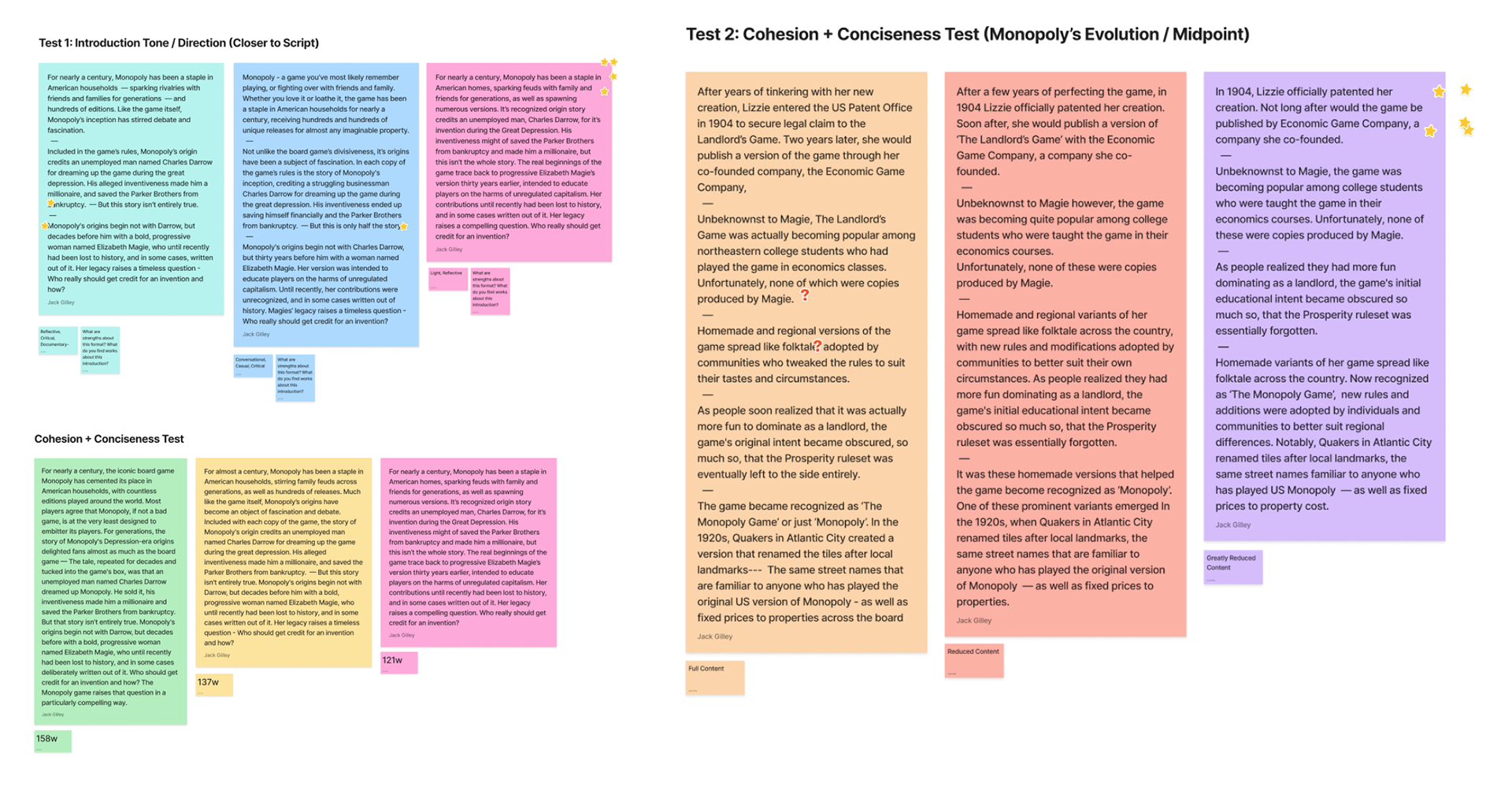
I developed a Figma deck that highlighted each corresponding frame of my storyboard with script material. Throughout this spring, I would reference this deck to test for voiceover timing, visual reference / inspiration, and overall project direction. Changes would be made weekly to the deck to ensure my capstone content was concise and cohesive.
Masking Process
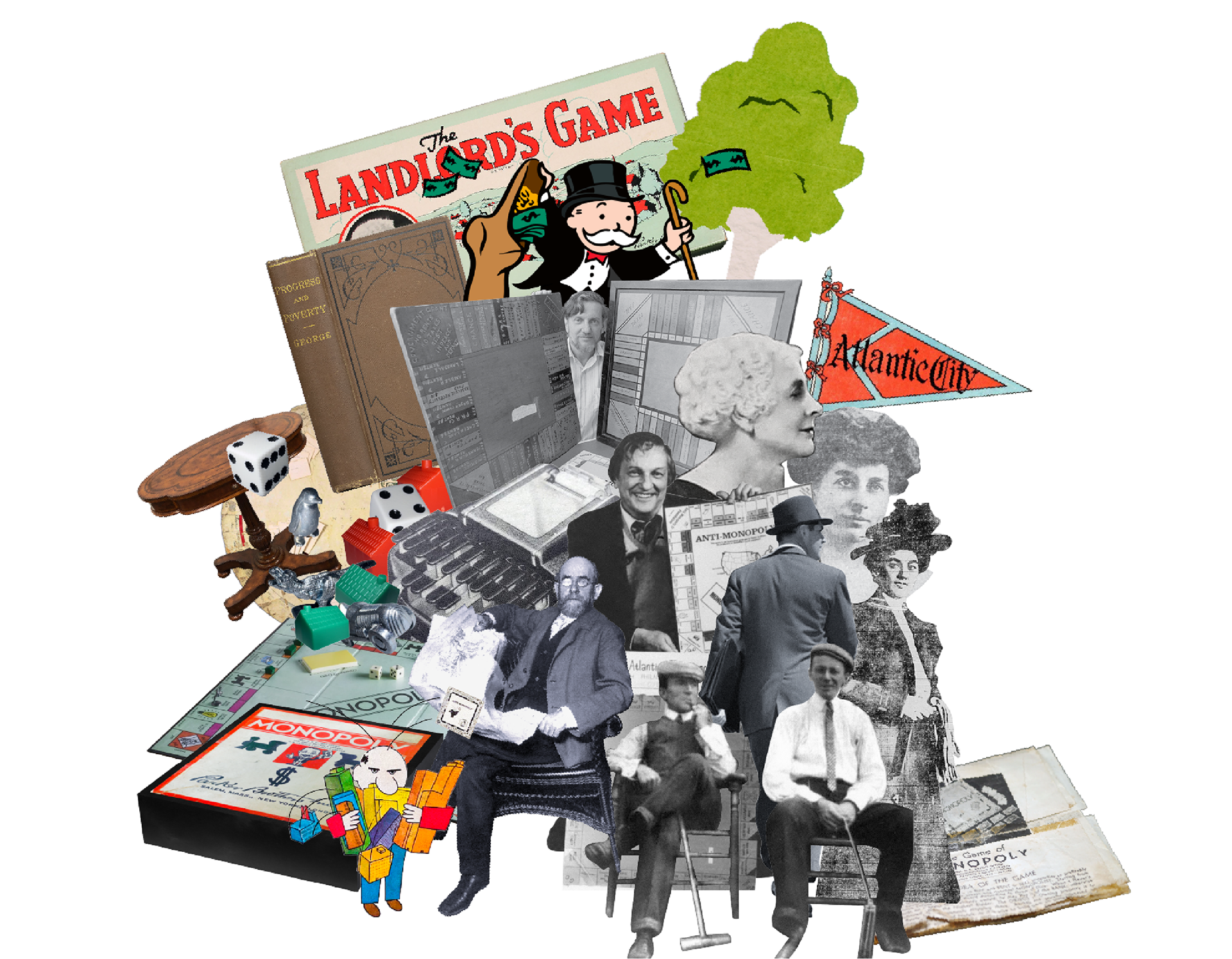
As the visual direction of my project leaned into a ‘animated collage’ look, I needed to digitally mask out nearly forty images. This process felt similar to physical cutting of imagery from print and magazines to create a narrative or new imagery. I wanted to avoid showcasing images or illustrations in the format they originally presented in. To maintain visual interest, each photo has keyframe controls (rotation, scale, position, orientation) and appears in various speed of movement.
Texture Work & Compositing
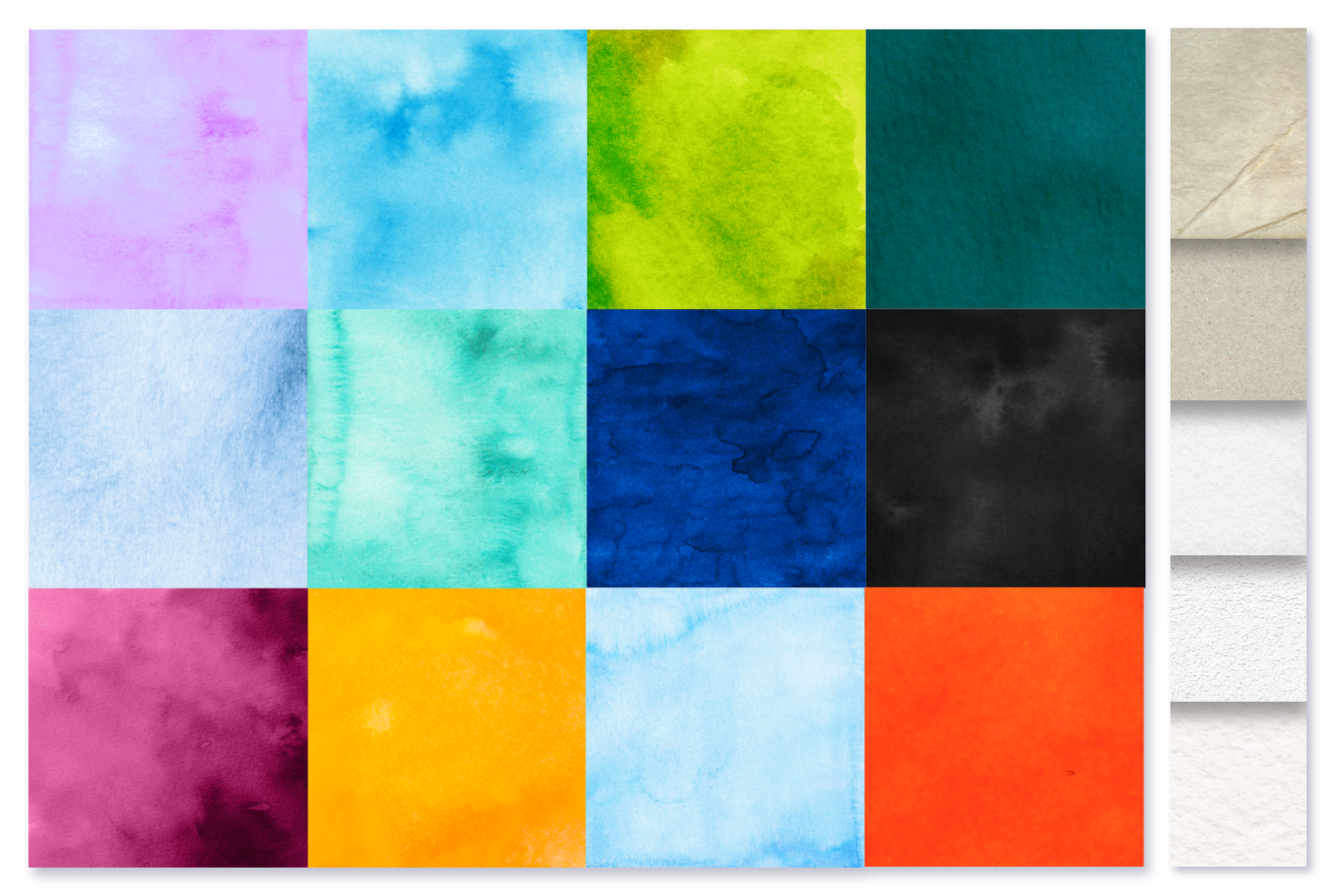
Collecting imagery from Unsplash and Freepik, I built a local library of various paper textures to incorporate throughout the video in compositing and blending modes to develop the animated collage look. Usage of watercoloring texturing in particular provided a rich and tactile feel to the background work and complimented the vibrancy of both ‘The Landlord’s Game’ and ‘Monopoly’.
Illustration & Cutouts
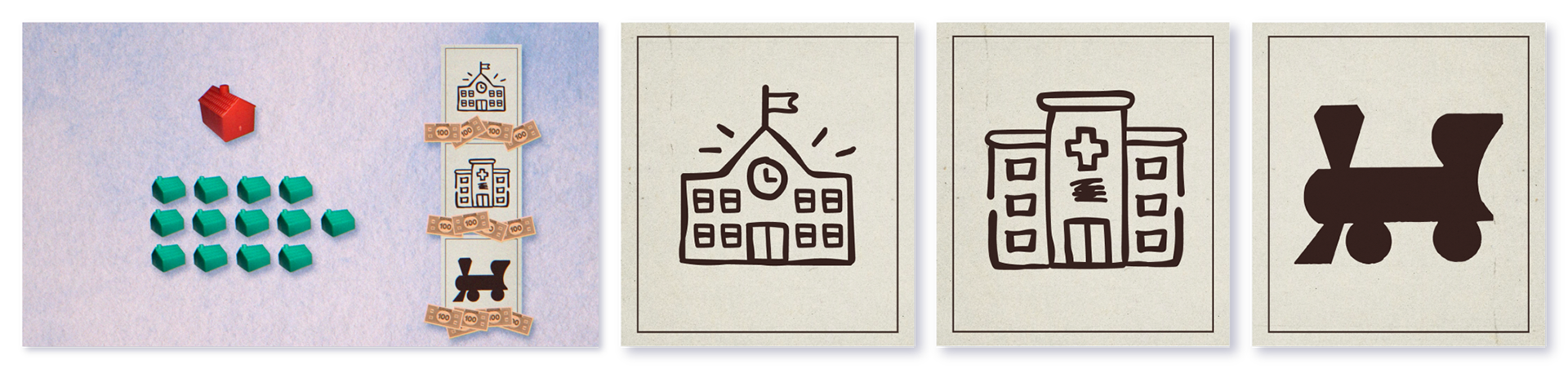
Physically scanned pieces from my own copy of Monopoly were incorporated during the title card as well as this sequence explaining theories of Georgism. I drew my own iconography for a school, and a hospital reminiscent of the illustrative line art done for ‘Water Works’ and ‘Electric Company’ in the game of Monopoly.

Using four images of photography/illustration of people playing games from the 1940s-1960s, I constructed a rough reference to build an illustration in a segment highlighting differences in game rules of ‘The Landlord’s Game’.
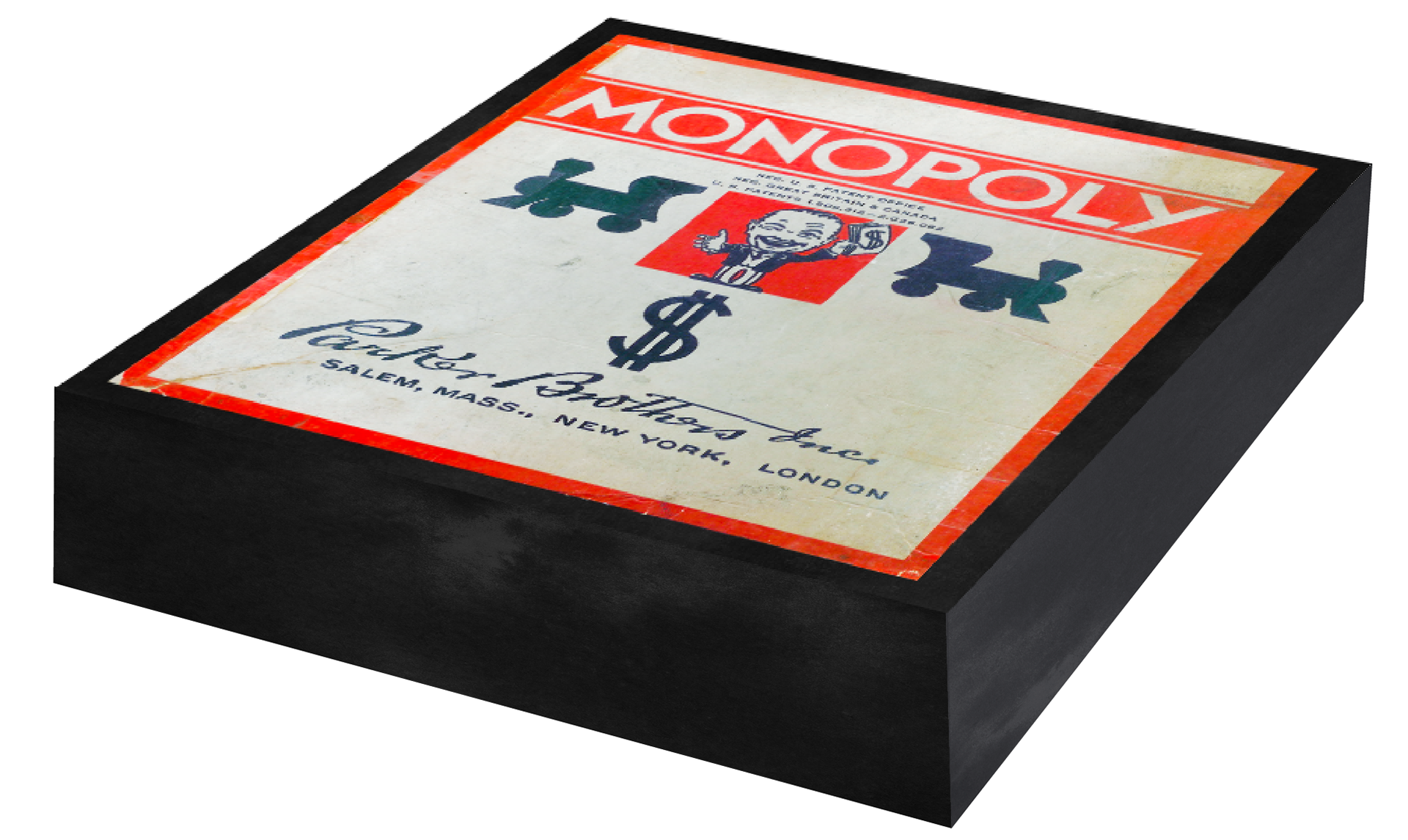
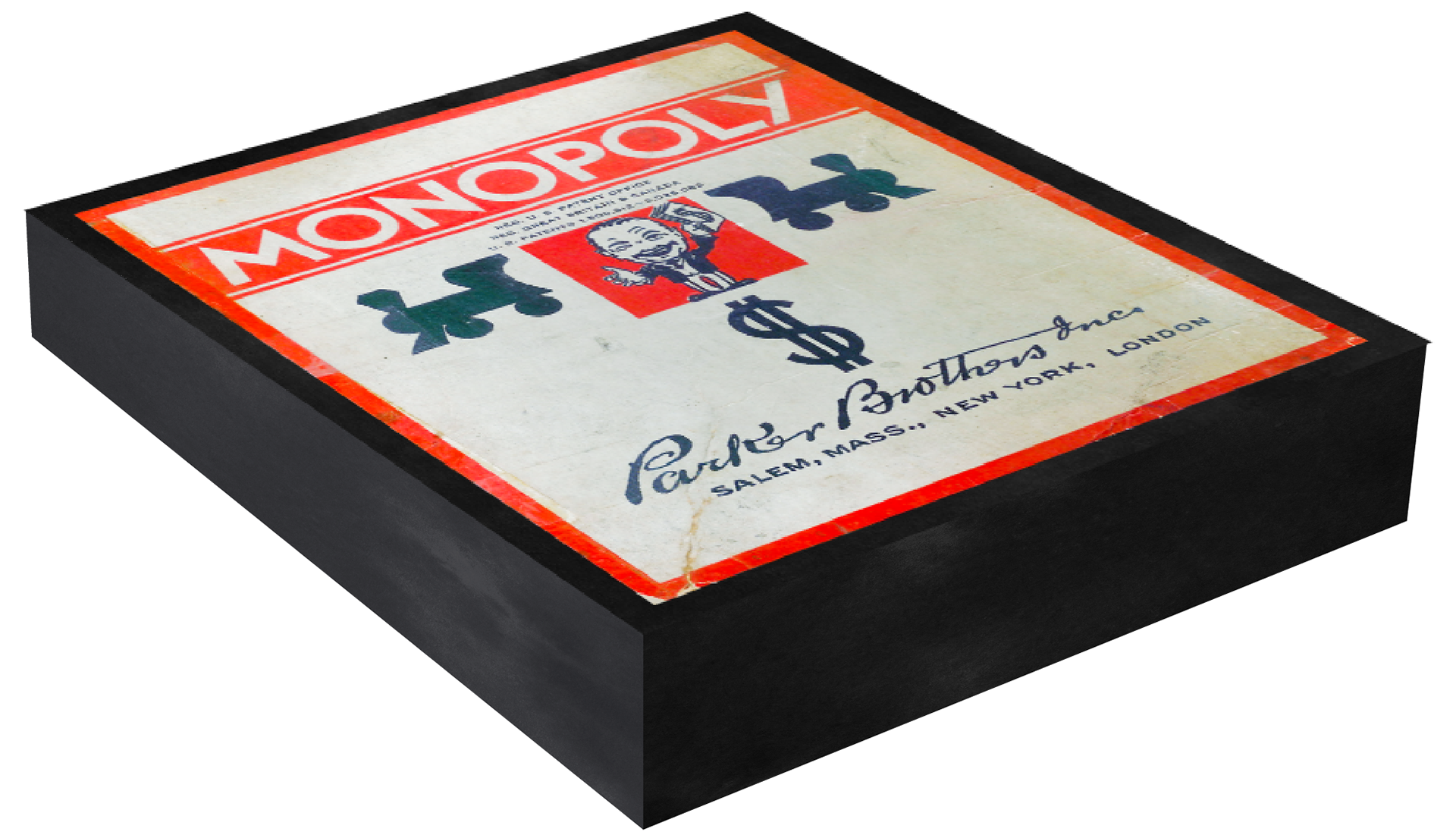
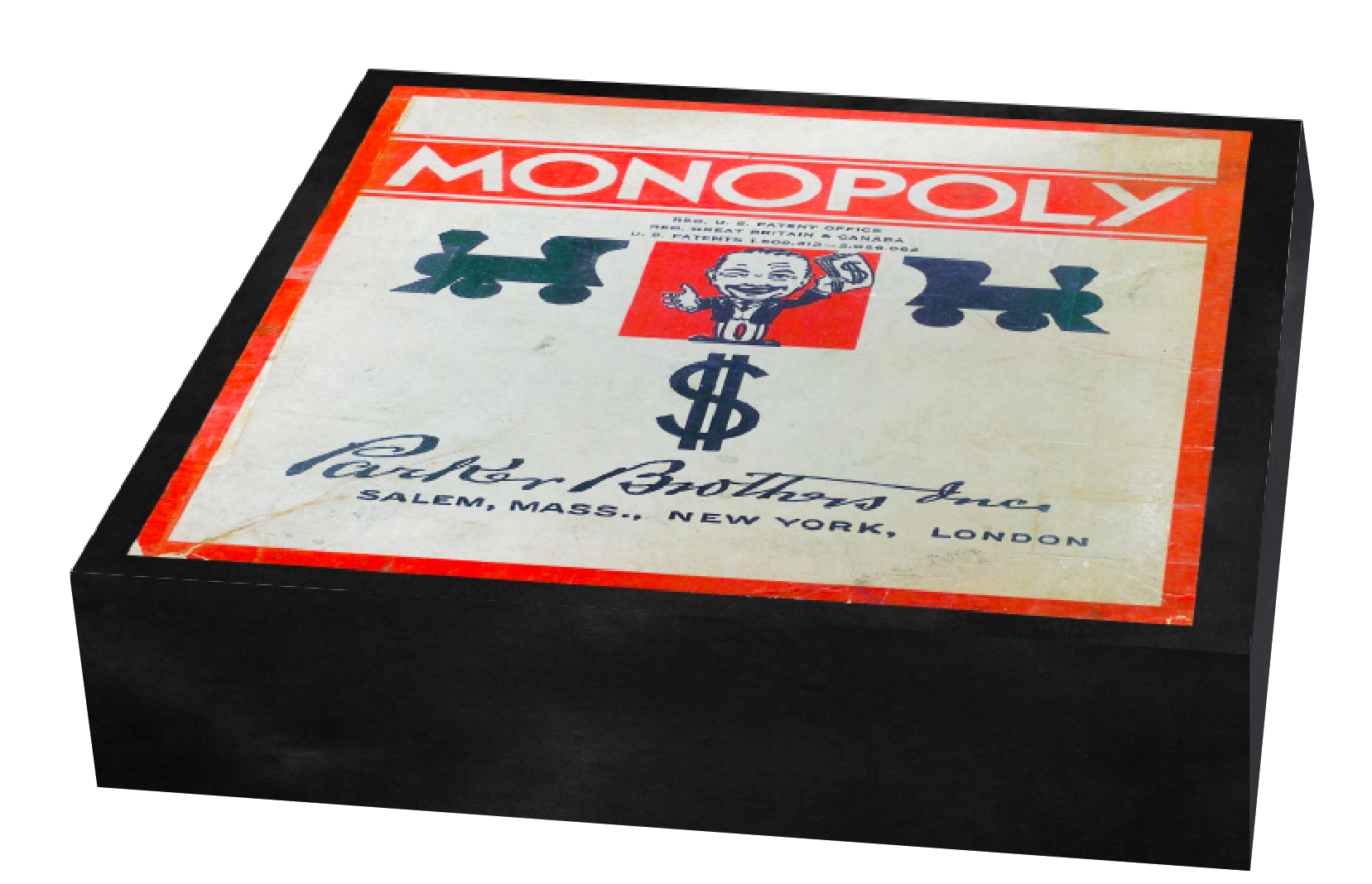
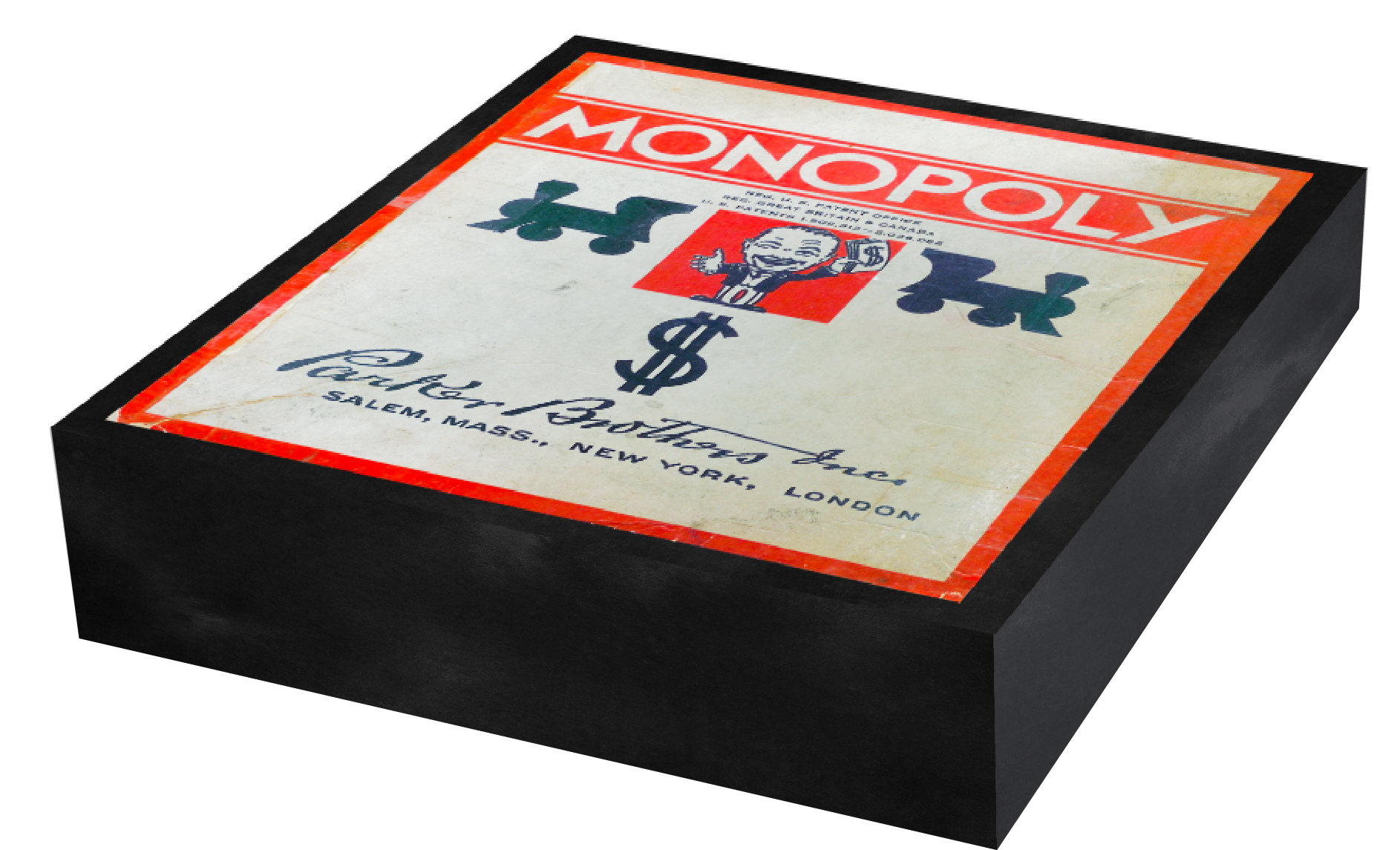
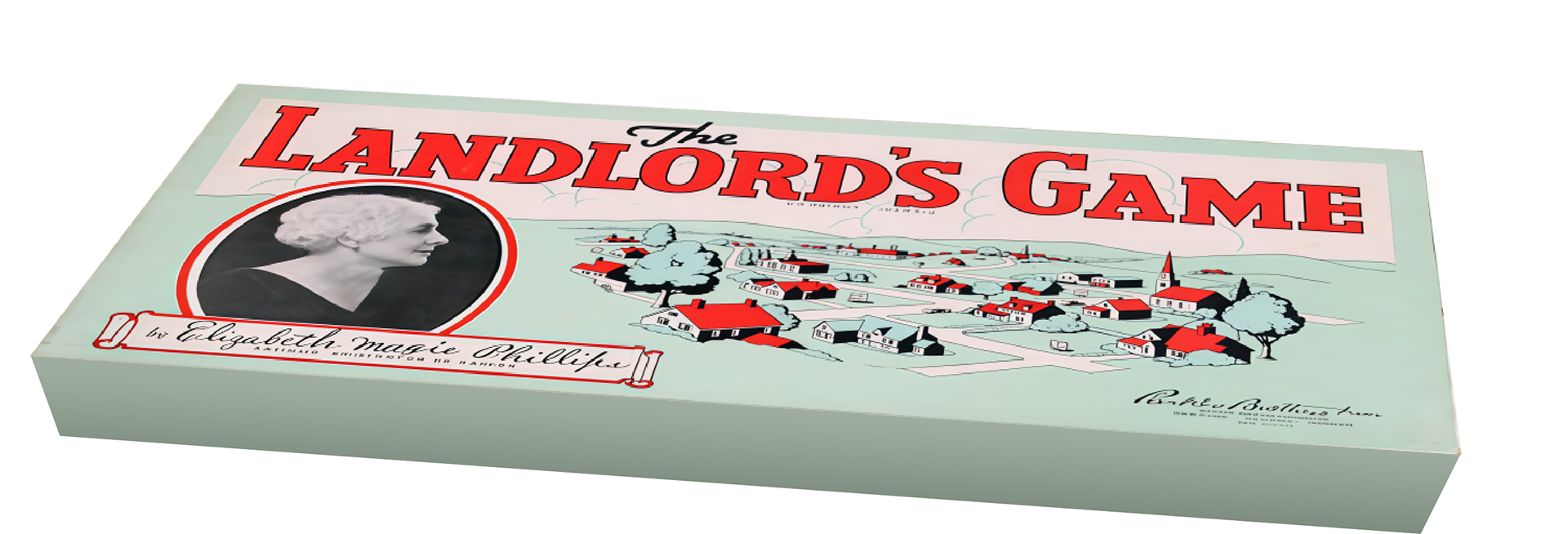
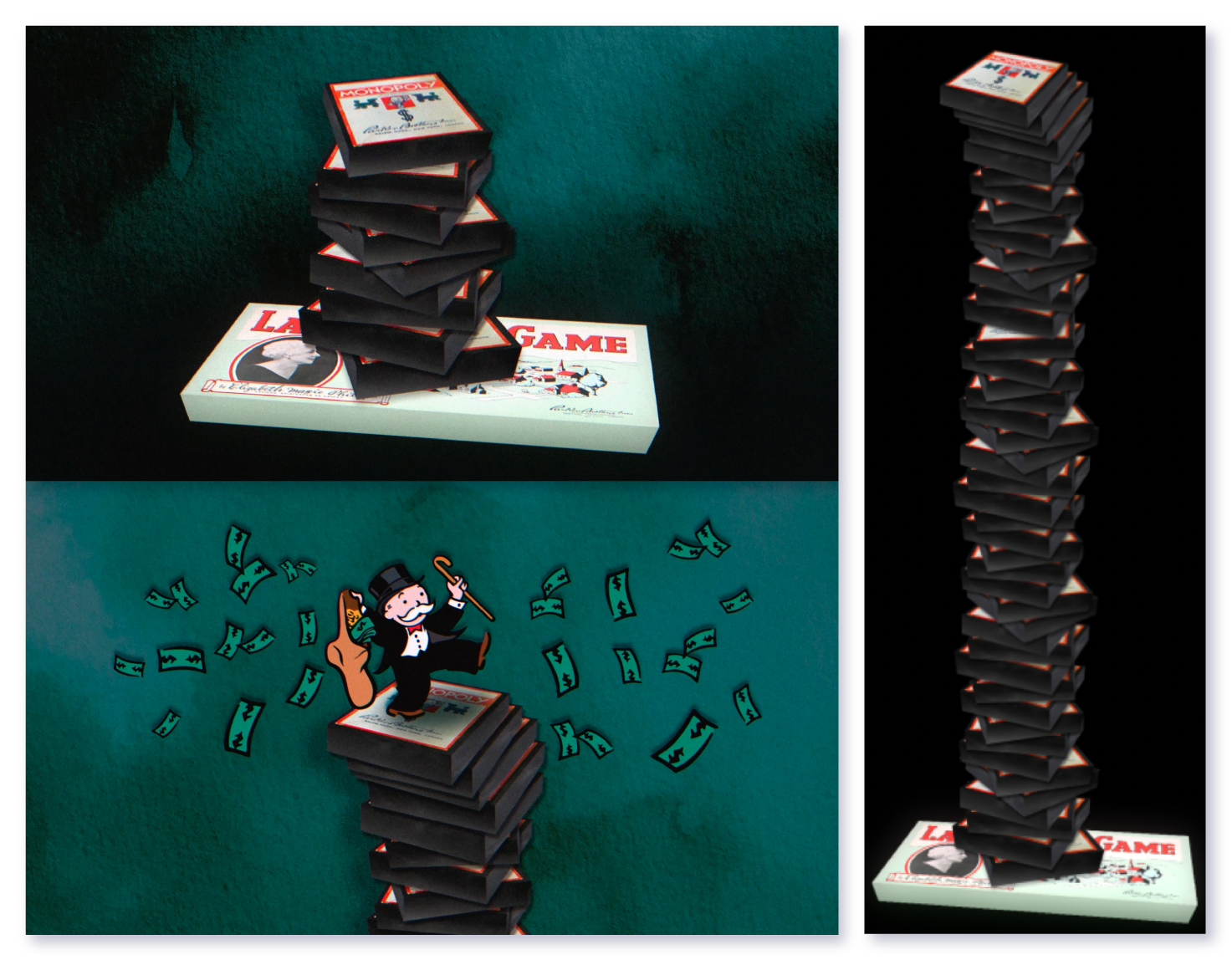
In my initial sketch storyboarding, this was one of the more complex compositions to plan. I needed multiple copies of an early edition of Monopoly to stack upwards, as well as variety in the angle of each game copy that fell. I started by 3D orienting just the front artwork of each box, before creating each perspective with textures through Illustrator. Bringing elements back into AE, I created a vertical composition to lay each game as it fell, with each getting faster than the last. Another comp outside of it would be the 1920x1080 window, working as the camera as it starts at the bottom and travels to the top. Background scaling and positioning were added as well to give depth to the effect. A separate composition was created for the Monopoly mascot standing upon the stack, as well as the top box having a corresponding shadow.
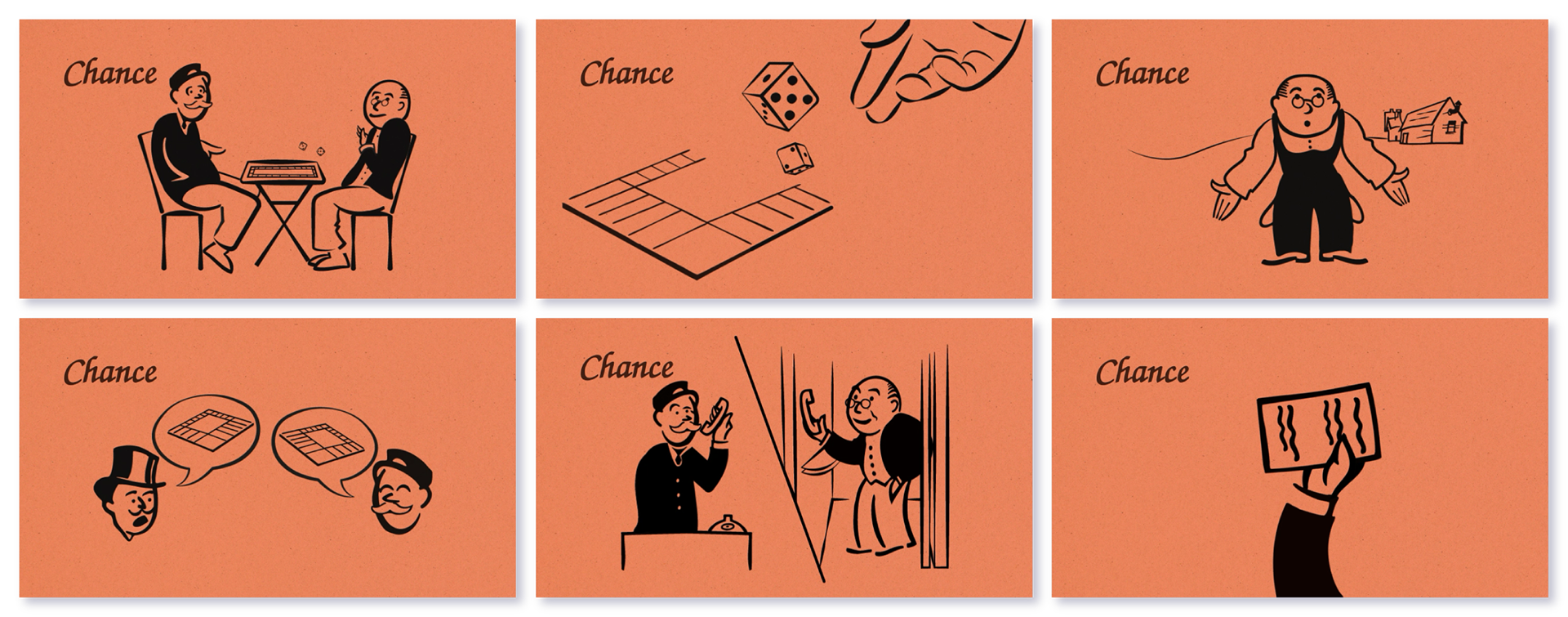
One challenging sequence was the development of custom Monopoly ‘Chance’ cards laid out for a segment where Charles Darrow discovers the game Monopoly from a close friend, reflecting the literal chance encounter he had with his ‘best selling idea’. I initially used ‘Image Trace’ to a dozen scanned in Chance cards, looking for certain strokes I could pull from to recreate hard poses like sitting down or look of clothes, and outlines of heads. I completed most of the artwork using variable stroke widths with the brush tool. Each card was also subtly animated between points of each character, and moved down the screen with each card revealing the one behind it. Each card was individually exported as a video before laying them out asymmetrically down a longer composition.
AE Project Structure / Post-Process
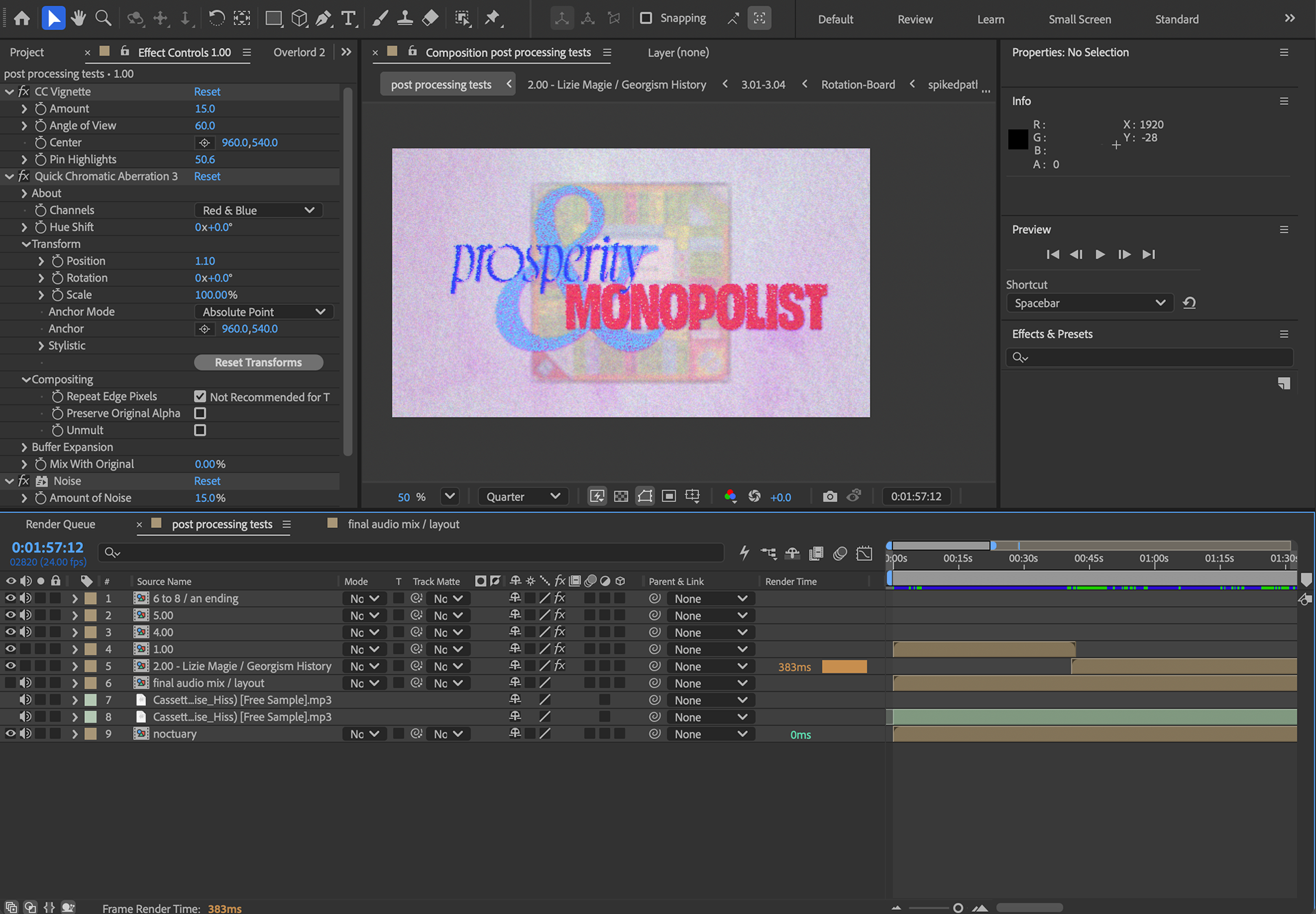
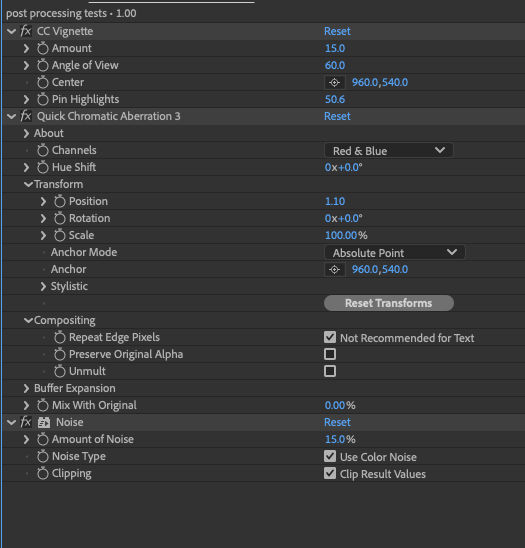
Before exporting each video draft and the final render, all comps featured subtle effects that gave the video a ‘filmic look’. Vignette brought out extra detail towards the corners of the export, Quick Chromatic Aberration simulated the imperfections found on film / camera artifacting, and Color Noise cleaned up camera lens blur / fast box transitions. A wiggle expression was additionally added to each comp to replicate the analog look when projecting film.
Final Storyboard Frames